
In this article
The short answer
Verify the seller, claimed quarry or processor relationship and identified lot separately. A trade name, attractive slab photograph or mining-process record does not establish all three.
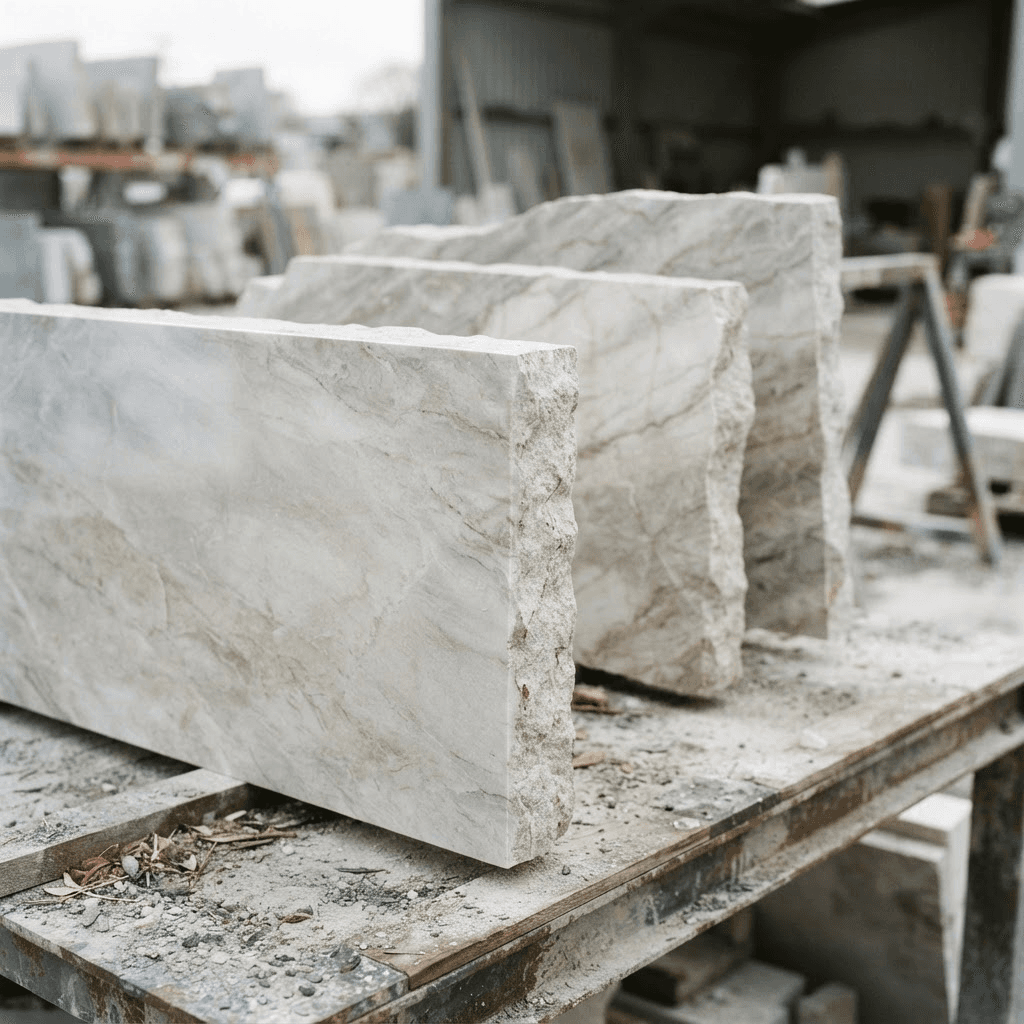
Establish whether the supplier extracts, processes or trades.
Ask for the contracting entity’s legal name, CNPJ or foreign identifier and declared role: quarry operator, processor, stockist, trader, exporter or agent. Compare that role with the quotation, invoice and company record. Do not force a reseller to look like a producer; instead, establish how it can obtain or dispose of the goods it offers.
For each facility named, record its operating entity and the seller’s relationship to it. A registered administrative address can differ from a processing site without being suspicious. A photograph of equipment, however, does not prove that the seller owns or operates it. Define which relationship actually matters to the proposed order.
Separate commercial naming from geological and geographic origin.
Keep the trade name, stated stone type, claimed origin and intended technical use in separate fields. Similar commercial names or visual appearances are not a geological classification. A material described as quartzite should not be accepted as technically suitable for a particular application on the strength of an online image.
If a quarry is claimed, obtain its operator, location and mining-process reference where relevant. ANM’s official systems provide routes to Cadastro Mineiro and public process research. Match the recorded holder and process information to the claim. A process record alone does not establish active lawful extraction, environmental compliance or that these slabs came from that quarry; qualified legal and technical review may be needed.
Connect quarry, processor and stockholder only where supported.
Ask which evidence links the quarry to the processor and the processor or stockholder to the seller. Depending on the model, relevant material may include purchase records, processing arrangements, lot records or authorized confirmation. Request only what is necessary for the agreed purpose and handle commercially sensitive records appropriately.
Record whether the evidence concerns an ongoing relationship or the actual goods. A historic invoice can support a past transaction without establishing today’s lot. Where the seller will source material only after the order, describe it as a sourcing commitment, not existing reserved stock. That distinction affects what an inspection could verify now.
Make the slab or bundle identifiable before relying on a sample.
Ask for stable block, bundle or slab references and reconcile the offered quantity, dimensions, thickness and finish. For selected material, establish how the photographed face is linked to those identifiers and whether the selection is reserved for this buyer. Do not infer exclusivity or allocation from the fact that a photograph was supplied privately.
On a small screen, scroll the table horizontally to compare columns.
| Field | Evidence to request | Question it helps answer |
|---|---|---|
| Lot identity | Bundle or slab references linked to dated photographs and records. | Are all parties discussing the same material? |
| Specification | Dimensions, thickness, finish and permitted variation in the order. | What is the agreed product, rather than a visual impression? |
| Condition and selection | An agreed independent inspection or acceptance process. | What was observed, sampled or accepted, and when? |
| Commercial control | Seller-to-stockholder relationship and allocation confirmation. | Who can commit the identified goods? |
| Shipment identity | Packing references reconciled with the selected lot. | Does the shipment correspond to the selection? |
Specify what the inspection does not answer.
A visual selection or physical inspection can help assess the identified material within its stated scope. It does not automatically establish geological classification, quarry origin, legal title or the supplier’s financial position. If performance in a particular installation matters, obtain appropriate testing and technical advice rather than using the diligence report as a materials warranty.
Agree sampling, access and identification before the visit. Record unexamined areas, inaccessible bundles and any substitutions. If the seller later changes the lot, the earlier inspection may no longer answer the acceptance question. Preserve the original selection record so the change is visible to procurement and the technical team.
Reconcile the commercial chain before the deposit.
Compare the seller, processor, exporter, invoice issuer and beneficiary. Ask for the transaction-specific basis when the payment recipient differs. The authenticity of a quarry or a well-known processor does not establish the right of an unrelated entity to collect the purchase price. Refer title and payment obligations to counsel and banking questions to the client’s bank.
Conclude separately on identity, facility relationships, origin support and the current lot. A useful next step names a gap: quarry linkage, stockholder authority, allocation or physical acceptance. “Supplier verified” conceals too much if one of those facts is the reason the buyer is willing to pay.
Sources & editorial notes
Official and professional references for the relevant sections. The workflows, comparisons and fictional examples are editorial analysis, not instructions issued by the cited institutions.
- Consult a Brazilian corporate registration (CNPJ)Brazilian Federal Revenue Service (opens in a new tab)
- Cadastro Mineiro and public mining-process systemsBrazilian National Mining Agency (opens in a new tab)
Reference pages checked 22 September 2026. Consult current records for your transaction; status, requirements and access can change. Some resources are in Portuguese or another source language.
General investigative information, not legal, banking, investment, credit, sanitary or technical advice. Examples are fictional, not client results. Official records do not verify a particular counterparty or transaction beyond their stated scope.
Connect the supplier’s story to the actual material.
We can examine the companies, facility relationships and lot claims behind your natural-stone offer.
Meet with an expert